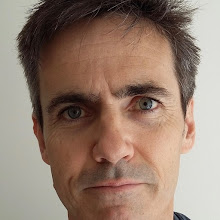
John Lonergan was the Governor of the largest prison in Ireland for over 20 years. I am reading his biography at the moment. It's a good read. He tried to bring modern management techniques into the prison and often faced stony opposition from the Prison Officers Association. He also mensions the apathy he faced from officials at the department of justice when he tried to introduce improvements in the prison.
Sometimes I think there are too many people for whom getting the job done well is irrelevant. the only thing that matters to them is themselves and their benefits. When people like this get into important positions in society we are in trouble. Some prison officers who won't play ball just ends up costing us a fortune (and keeping funding from our victorian prisons), but when unionised staff get into our schools our childrens future is at risk.
Friday, September 30, 2011

Teachers unions and pensions
Our government is currently trying to reduce the future burden that pensions place on the tax payers of the state. Their attempt this week to reduce the pension entitlements of higher earning civil servants who have not yet even started their careers has been met with an anything but civil response. The INTO for example is threatening legal action over what is claims is larcenous behaviour on the part of the government. I suppose this is what we should expect from a union - they don't have any other function. But this sounds a bit strong for me.
I read a while ago that if a non civil servant earned the same as the typical high court judge throughout their career - i.e. they track the judges pay as it rises from very junior barrister all the way through to judge - they would have to contribute most of their income over their whole career to get the same pension as the judge. Clearly someone has to pay for the pension, but for public servants the attitude seems to be 'as long as that someone is not me'.
In a way it is sad that our leaders have shied away from this problem for so long (as have leaders all over the world). Only now that the cupboard is bare is government getting up the gumption to square up to the bullies. It remains to be seen what will come of it, but the teachers will no doubt want to continue extracting blood from turnip.
I read a while ago that if a non civil servant earned the same as the typical high court judge throughout their career - i.e. they track the judges pay as it rises from very junior barrister all the way through to judge - they would have to contribute most of their income over their whole career to get the same pension as the judge. Clearly someone has to pay for the pension, but for public servants the attitude seems to be 'as long as that someone is not me'.
In a way it is sad that our leaders have shied away from this problem for so long (as have leaders all over the world). Only now that the cupboard is bare is government getting up the gumption to square up to the bullies. It remains to be seen what will come of it, but the teachers will no doubt want to continue extracting blood from turnip.
Tuesday, September 27, 2011
The Front Line
I watched a few minutes of the RTE programme The Front Line last night. They were talking about unemployment when I watched. I must admit that I had been thinking that many of the people on the dole were having it easy, but this woman certainly was not. Both her and her husband had lost their jobs (a not uncommon event in Ireland over the last couple of years). They had 2 children and she described her experiences with the dole office. In some ways I don't think the dole should be a pleasant place to visit, but then again how you think it should operate all comes down to whether or not you think people are genuine claimants or skivers. I think our focus on the people who don't try, care, train themselves or generally take responsibility is overshadowing the much more serious problem of those to whom that description does not apply, but who find themselves unable to get a job.
The problem is probably more intractable in rural areas where people may have relied on a key area. In urban areas there is so much activity (albeit with so many people who can potentially fill the jobs) that it can be hard to see how someone cannot find any job. However the problem is that just any job will not meet the needs for many families. Large mortgages, taken out at a time when this was considered 'normal' have to be serviced and this puts pressure on everything else that they do. Going from one or even 2 well paying jobs and a big mortgage to no jobs, social welfare and still the big mortgage must be a nightmare.
I suppose what we need to do find a balance between helping those who need the help and cutting off funding to those who don't. For their part families that find themselves on social welfare need to radically adjust their expectations. The lady last night described how hard it was to constantly say now to your children. There are worse things than having to deny your children money for the shops. Social welfare should not be fun to live on. Getting a job and getting out of it should be the priority.
The problem is probably more intractable in rural areas where people may have relied on a key area. In urban areas there is so much activity (albeit with so many people who can potentially fill the jobs) that it can be hard to see how someone cannot find any job. However the problem is that just any job will not meet the needs for many families. Large mortgages, taken out at a time when this was considered 'normal' have to be serviced and this puts pressure on everything else that they do. Going from one or even 2 well paying jobs and a big mortgage to no jobs, social welfare and still the big mortgage must be a nightmare.
I suppose what we need to do find a balance between helping those who need the help and cutting off funding to those who don't. For their part families that find themselves on social welfare need to radically adjust their expectations. The lady last night described how hard it was to constantly say now to your children. There are worse things than having to deny your children money for the shops. Social welfare should not be fun to live on. Getting a job and getting out of it should be the priority.
Sunday, September 25, 2011
Unions in Ireland
I think about the way unions impact the lives of everyone who is not a member quite a bit. Over the years the membership of unions in most countries - not just Ireland has shrivelled in the private sector and held fairly in the public sector. Why is this? I think it is because heavy union interference in how a business is run counts as a competitive impediment. The more interference a company's board experience as they try to get things done, the more likely they are to fail. Add up the failures over time and eventually the competition wins. The workers lose their jobs and the business is gone. Maybe to China, maybe to a better run factory down the road, but gone one way or another.
The public sector however is a different matter. They don't compete, are not measured against the market - even if they should be - and generally are impact proof when it comes to what unions can do to a public sector organisation. However in Ireland at the moment money is tight. That is putting it mildly. The constant drip drip of benefits that union members have gained (at the expense of everyone else) has to stop and be reversed. The working life of a teacher is now so light on actual work as to be a part time job with better than full time pay.
We live in a republic. Should we not expect our elected leaders to stand up to the twisting of our arms?
The public sector however is a different matter. They don't compete, are not measured against the market - even if they should be - and generally are impact proof when it comes to what unions can do to a public sector organisation. However in Ireland at the moment money is tight. That is putting it mildly. The constant drip drip of benefits that union members have gained (at the expense of everyone else) has to stop and be reversed. The working life of a teacher is now so light on actual work as to be a part time job with better than full time pay.
We live in a republic. Should we not expect our elected leaders to stand up to the twisting of our arms?
Subscribe to:
Posts (Atom)